

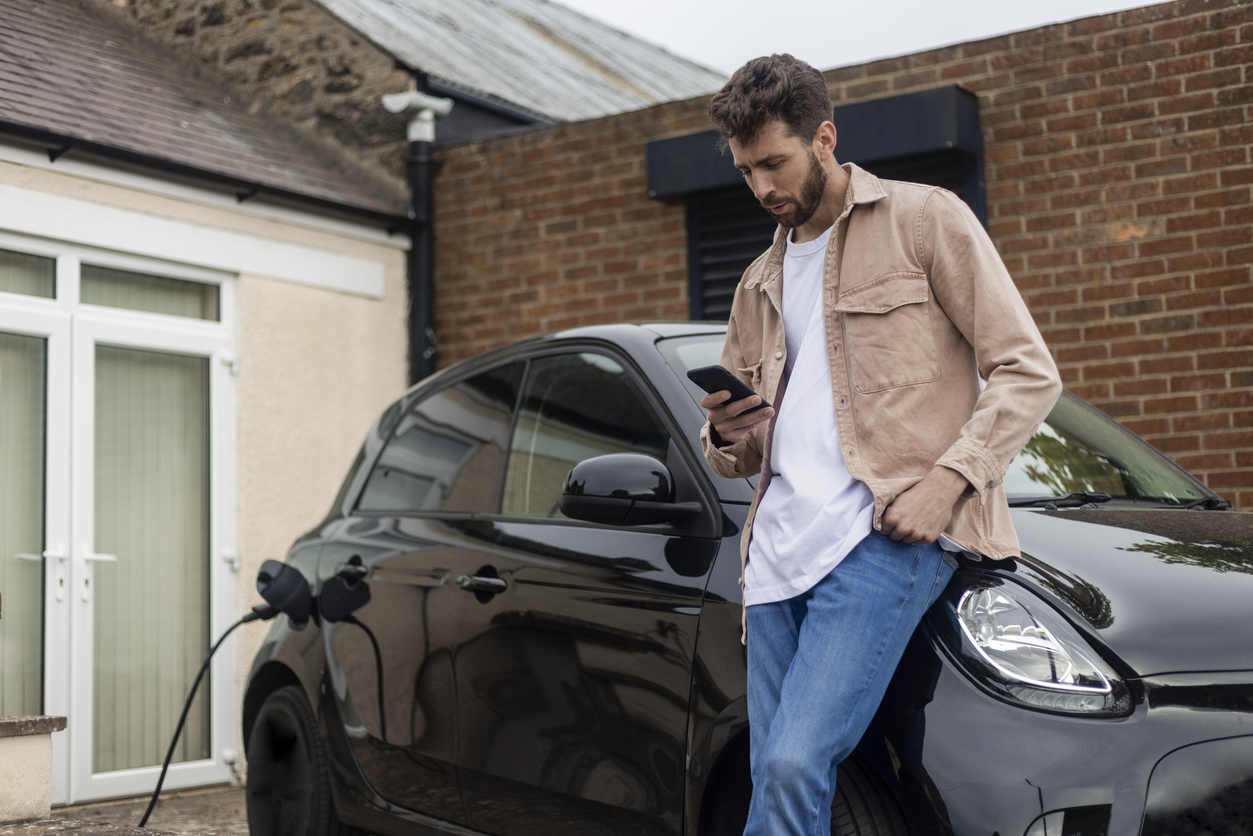
Octopus Go and Intelligent Octopus Go are both designed to make charging an electric car at home cheaper. They offer lower electricity prices overnight, allowing you to charge your EV for considerably less than you would pay on a standard electricity tariff.
The main difference is how the charging is managed.
Octopus Go gives you a fixed five-hour period of cheaper electricity every night and works with any electric car or charger. Intelligent Octopus Go gives your home six cheaper hours every night and automatically schedules a compatible car or charger to charge when electricity is expected to be cheaper and often greener.
For most drivers with compatible equipment, Intelligent Octopus Go is likely to offer the stronger package because it provides a longer cheap period, automatic smart charging and the possibility of additional discounted periods for your home.
Octopus Go’s main advantages are wider compatibility, predictable charging times and greater control over when your car charges.
Octopus Go vs Intelligent Octopus Go comparison
| Feature | Octopus Go | Intelligent Octopus Go |
|---|---|---|
| Cheap whole-home period | Five hours | Six hours |
| Core cheap hours | 12:30am to 5:30am | 11:30pm to 5:30am |
| Smart charging | No | Yes |
| Smart charging outside core hours | No | Yes |
| Who schedules charging? | You | Octopus |
| Compatible EV or charger required? | No | Yes |
| Multiple EVs | Yes | Yes, subject to compatibility |
| Smart meter required | Yes | Yes |
| Best suited to | Simple self-scheduled charging | Automatic smart charging |
Electricity rates and standing charges vary by region. Octopus asks customers to enter their postcode to see the rates that apply to their home.
You can also see how these tariffs fit alongside Octopus’s other charging options in our guide to Octopus Energy EV tariffs.
Which Octopus EV tariff is likely to suit you?
Intelligent Octopus Go is likely to suit you if:
- your car or charger is compatible
- you want Octopus to schedule charging automatically
- you want six hours of cheaper whole-home electricity
- you regularly charge your EV at home
- you are happy for Octopus to control when smart charging takes place
- you could benefit from discounted smart-charging periods outside the normal overnight window
Octopus Go is likely to suit you if:
- your car or charger is not compatible with Intelligent Octopus Go
- you want a simple fixed charging period
- you prefer to set your own charging timer
- five cheaper hours are enough for your normal charging needs
- you do not want Octopus to control the charging session
For compatible households, Intelligent Octopus Go generally offers more features. Octopus Go is simpler and works with a much wider range of charging setups.
How does Octopus Go work?
Octopus Go provides five hours of cheaper electricity every night from 12:30am to 5:30am.
The lower rate applies to all the electricity your home uses during that window, not just the energy used to charge the car. Electricity used outside those hours is charged at the tariff’s daytime rate.
Octopus does not control your charging.
Instead, you need to use the timer in your car, charger or charging app to make sure charging takes place during the cheaper period.
Its main advantage is compatibility. Octopus Go works with any EV or charger, so you do not need a particular vehicle integration or compatible smart charger.
This makes Octopus Go a useful option when:
- your setup is not supported by Intelligent Octopus Go
- you want the same charging period every night
- your car can complete its normal charge within five hours
- you are comfortable setting the charging schedule yourself
- you want to remain in control of when the car charges
See our complete Octopus Go guide for current rates, eligibility, off-peak hours and how to switch.
How does Intelligent Octopus Go work?
Intelligent Octopus Go provides your home with six hours of cheaper electricity every night between 11:30pm and 5:30am.
It also connects to a compatible electric car or charger and manages the EV charging automatically.
You tell the system how much charge you need and when you need the car ready. Octopus can then choose when to charge the vehicle based on when electricity is expected to be cheaper and often greener.
The important distinction is that the home’s six-hour period and the EV’s smart-charging allowance are related but not exactly the same thing.
Your home always receives the cheaper rate between 11:30pm and 5:30am.
Your connected EV can receive up to six hours of discounted smart charging per day. Octopus may schedule that charging:
- entirely within 11:30pm to 5:30am
- partly inside and partly outside the overnight period
- or, in some cases, entirely outside the standard overnight period
If Octopus schedules eligible smart charging outside 11:30pm to 5:30am, your whole home also receives the discounted rate during those scheduled half-hours.
That can make Intelligent Octopus Go particularly useful for households that can shift appliances, battery charging or other electricity use into those additional periods.
See our full Intelligent Octopus Go guide for rates, compatibility, charging rules and how to switch.
What is the Intelligent Octopus Go six-hour Charge Cap?
Intelligent Octopus Go includes up to six hours of discounted smart charging per day.
Octopus measures the allowance from midday to midday.
Only the time that the EV is actually smart charging counts towards the allowance. Simply leaving the car plugged in does not use up the six hours.
If Octopus schedules your car to charge outside the normal 11:30pm to 5:30am period, those smart-charging periods still count towards the same six-hour allowance.
They are not six additional cheap charging hours on top of the overnight period.
For example, if Octopus schedules:
- two hours between 8pm and 10pm
- and four hours between midnight and 4am
your EV has received its six hours of discounted smart charging.
Your home would receive the cheaper rate during the 8pm to 10pm scheduled smart-charging period as well as its normal 11:30pm to 5:30am cheap window.
If your EV needs more than six hours of smart charging, electricity used to charge the car beyond the allowance can be charged at the daytime rate.
Octopus has also introduced a Charge Cap feature for supported setups that can stop charging before the car moves onto the more expensive rate.
Is Intelligent Octopus Go cheaper than Octopus Go?
Intelligent Octopus Go will often offer the stronger charging arrangement when your equipment is compatible, but you should compare the complete tariff rather than looking only at the headline EV rate.
It provides:
- one additional hour of guaranteed cheaper whole-home electricity
- automatic smart charging
- discounted smart charging that can be scheduled outside the core overnight period
- additional whole-home discounted periods when eligible smart charging is scheduled outside the core window
- a competitive EV charging rate
Octopus can offer competitive smart-charging rates because it controls when the vehicle charges and can move demand away from more expensive periods.
However, the lowest EV charging rate does not automatically mean the lowest overall household electricity bill.
You should also compare:
- the daytime electricity rate
- the standing charge
- how much electricity your home uses during the day
- how much EV charging you can move onto the cheaper rate
- whether you regularly need more than six hours of EV charging
- whether you frequently use immediate or boost charging
Rates vary by postcode, so compare the complete regional tariff before switching.
How much difference does the EV charging rate make?
The amount you save depends heavily on how far you drive.
For example, an EV covering 10,000 miles per year and averaging around 3.5 miles per kWh would need roughly:
10,000 ÷ 3.5 = 2,857kWh
of electricity for driving, before allowing for charging losses.
For that level of usage, every 1p/kWh difference in the price of charging represents roughly:
2,857 × £0.01 = £28.57 per year
So even a relatively small difference between the Octopus Go and Intelligent Octopus Go off-peak rates can become meaningful for a high-mileage EV driver.
However, your overall electricity bill also depends on the tariffs’ daytime rates and how much electricity the rest of your home uses.
What is the difference between fixed and smart charging?
Octopus Go uses a fixed schedule.
You know electricity will be cheaper between 12:30am and 5:30am, so you set your car or charger to operate during that period.
The charging time remains predictable every night.
Intelligent Octopus Go uses smart scheduling.
Your whole home has its guaranteed cheaper period between 11:30pm and 5:30am, but Octopus can decide when your EV actually smart charges.
You tell the system what charge you need and when the car needs to be ready. Octopus then creates the charging schedule.
The car might charge entirely overnight, or some of the charging could be moved to other periods.
That gives Intelligent Octopus Go more flexibility, but it means you need to allow Octopus to manage the charging session.
If you choose to charge immediately rather than follow the smart schedule, that charging can be billed at the daytime rate.
How much can you charge overnight?
The amount of energy you can add to your car depends on the power of your home charger.
A typical 7kW home charger could theoretically supply:
- around 35kWh during the five-hour Octopus Go window
- around 42kWh during six hours of Intelligent Octopus Go charging
Some energy is lost during charging, so slightly less will actually reach the battery.
For an EV averaging around 3.5 miles per kWh, the additional 7kWh could represent roughly another 20 to 25 miles of driving range.
Most drivers do not charge from empty every night, so five hours may already be enough for normal daily top-ups.
The extra hour becomes more useful if you:
- drive longer distances
- have a large EV battery
- regularly arrive home with a low state of charge
- use a slower charging setup
What if your car is not compatible with Intelligent Octopus Go?
Octopus Go is the straightforward alternative if neither your car nor charger can connect to Intelligent Octopus Go.
You still receive five cheaper hours every night and can use the charging timer in your car or charger to keep charging within the off-peak window.
Before choosing Go, however, check both Intelligent Octopus Go compatibility routes.
Your car might not be supported directly, but your charger could be.
Likewise, you may be able to connect the car directly even if your charger is not one of the supported integrations.
Compatibility changes regularly as Octopus adds new cars and chargers, so check the current list before switching.
Can you charge more than one EV?
Yes, although the two tariffs handle multiple cars differently.
With Octopus Go, you can charge multiple EVs during the fixed 12:30am to 5:30am period. How much energy each vehicle receives will depend on your chargers, load balancing and the available power at your property.
Intelligent Octopus Go can also support multiple connected EVs, but the rules depend on the cars involved.
Octopus divides compatible vehicles into different groups, and some combinations can be connected together while others have restrictions.
If you have two or more EVs, check the current Intelligent Octopus Go multi-car compatibility rules before switching.
Even where a vehicle cannot be added to smart charging, it may still be possible to charge it manually during the guaranteed 11:30pm to 5:30am cheap period.
What are the main downsides of Octopus Go?
Octopus Go is deliberately simple, but that also means it has fewer smart features.
Its main limitations are:
- only five cheaper hours each night
- you need to schedule charging yourself
- there are no Octopus-managed smart-charging periods
- you do not receive additional cheap whole-home periods created by Intelligent smart charging
For many drivers, however, that simplicity is the attraction.
If you plug in at roughly the same time every evening and five hours is enough to replenish your normal daily mileage, Octopus Go may do everything you need.
What are the main downsides of Intelligent Octopus Go?
Intelligent Octopus Go offers more flexibility, but there are additional requirements.
Its main limitations include:
- your car or charger needs to be compatible
- you need to allow Octopus to manage smart charging
- smart charging depends on the connection between Octopus and your car or charger
- discounted smart charging is limited to six hours per day
- immediate or boost charging outside the discounted rules can be charged at the daytime rate
- multiple EV setups can have additional compatibility restrictions
For most compatible households, these trade-offs may be outweighed by the longer cheap period and automatic smart charging.
But drivers who want complete control over exactly when their car charges may prefer the simplicity of Octopus Go.
Octopus Go vs Intelligent Octopus Go: which should you choose?
For most EV drivers with compatible equipment, Intelligent Octopus Go is likely to offer the stronger overall package.
You get six hours of cheaper whole-home electricity rather than five, automatic EV charging and the possibility of additional discounted periods when Octopus schedules smart charging outside the standard overnight window.
However, that does not make Octopus Go redundant.
Octopus Go remains a good option if your equipment is not compatible, you prefer a predictable five-hour schedule or you simply want to control charging yourself.
The choice can therefore be simplified to:
Choose Intelligent Octopus Go if you want smarter, more flexible charging and your equipment is compatible.
Choose Octopus Go if you value simplicity, compatibility and control over your charging schedule.
Frequently asked questions
Is Intelligent Octopus Go better than Octopus Go?
For most drivers with compatible equipment, Intelligent Octopus Go is likely to provide the stronger set of features.
It provides six cheaper whole-home hours rather than five, automatically manages EV charging and can schedule discounted charging outside the normal overnight window.
Octopus Go is simpler and works with any EV or charger.
Does Intelligent Octopus Go always charge between 11:30pm and 5:30am?
No.
Your home always receives its cheaper electricity period between 11:30pm and 5:30am, but your connected EV can be scheduled to charge at other times.
Octopus chooses the smart-charging periods based on when electricity is expected to be cheaper and often greener.
Does the cheap rate apply to the whole house?
Yes during the fixed overnight windows.
On Octopus Go, your whole home receives the cheaper rate between 12:30am and 5:30am.
On Intelligent Octopus Go, your whole home receives the cheaper rate between 11:30pm and 5:30am.
If Octopus schedules eligible Intelligent smart charging outside that window, the whole home can also receive the discounted rate during those scheduled half-hours.
Does Intelligent Octopus Go give you 12 cheap charging hours?
No.
The six-hour whole-home overnight period and six-hour EV smart-charging allowance should not be added together.
Your home always receives six cheap hours between 11:30pm and 5:30am.
Your EV receives up to six hours of discounted smart charging per day, and Octopus may schedule those charging hours inside the home window, outside it or across both.
What happens if Intelligent Octopus Go charges my EV for more than six hours?
The discounted smart-charging allowance is limited to six hours per day.
If your EV continues charging beyond that allowance, the additional EV charging can be billed at the daytime rate.
Simply having the car plugged in does not use the allowance. It is the time that the vehicle is actually smart charging that counts.
Can I control when Intelligent Octopus Go charges my car?
You control your charging requirements rather than choosing every individual charging period.
You tell the system how much charge you need and when the car needs to be ready. Octopus then determines the smart-charging schedule.
If you need the car to charge immediately, you can override the smart schedule, but charging outside the discounted rules can be billed at the daytime rate.
Do I need an Octopus charger?
No.
Octopus Go works with any EV or charger.
Intelligent Octopus Go requires a compatible car or charger, but the equipment does not need to have been supplied or installed by Octopus.
Do I need a smart meter?
Yes.
Both tariffs rely on smart-meter readings so Octopus can identify when electricity was used and apply the correct peak and off-peak rates.
Can I switch from Octopus Go to Intelligent Octopus Go later?
Yes, provided your car or charger is compatible and your smart meter meets the Intelligent Octopus Go requirements.
You will need to connect the compatible equipment and complete the Intelligent Octopus Go setup process.
If your current equipment is not supported, you can remain on Octopus Go and check the compatibility list periodically as Octopus continues adding integrations.